Thermomyces stellatus
Thermomyces stellatus is a thermophilic mould first isolated from mouldy hay in England and Wales (Apinis, 1972).
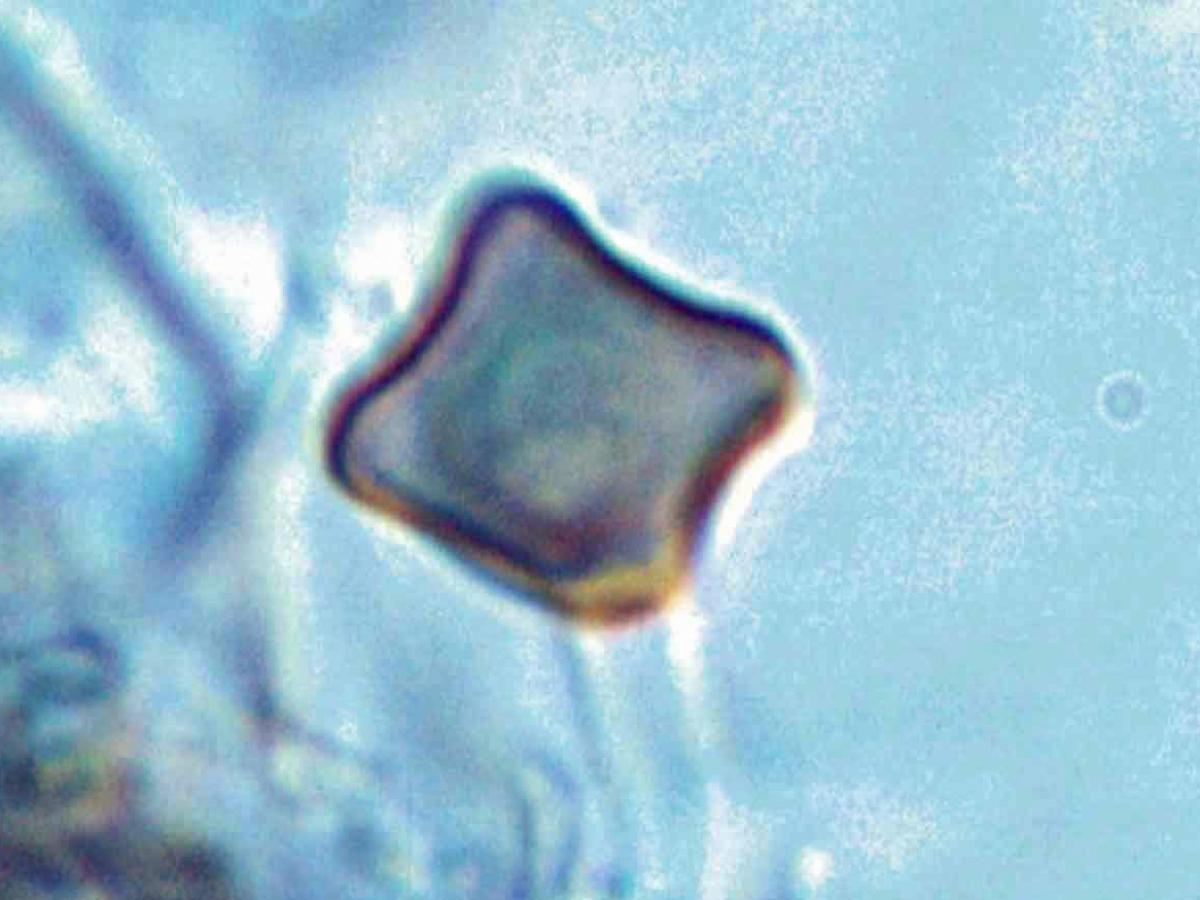
Stellate pigmented conidium of Thermomyces stellatus.
RG-1 organism.
Morphological description:
Colonies are moderately fast growing, olivaceous-grey, suede-like to floccose and grow at temperatures up to 50C. Conidiophores are short lateral branches of the vegetative hyphae each bearing a single terminal conidium. Conidia are one-celled, smooth-walled, subglobose and hyaline when young, becoming dark brown and stellate (star-shaped) when mature, 2 x 3 µm in size.
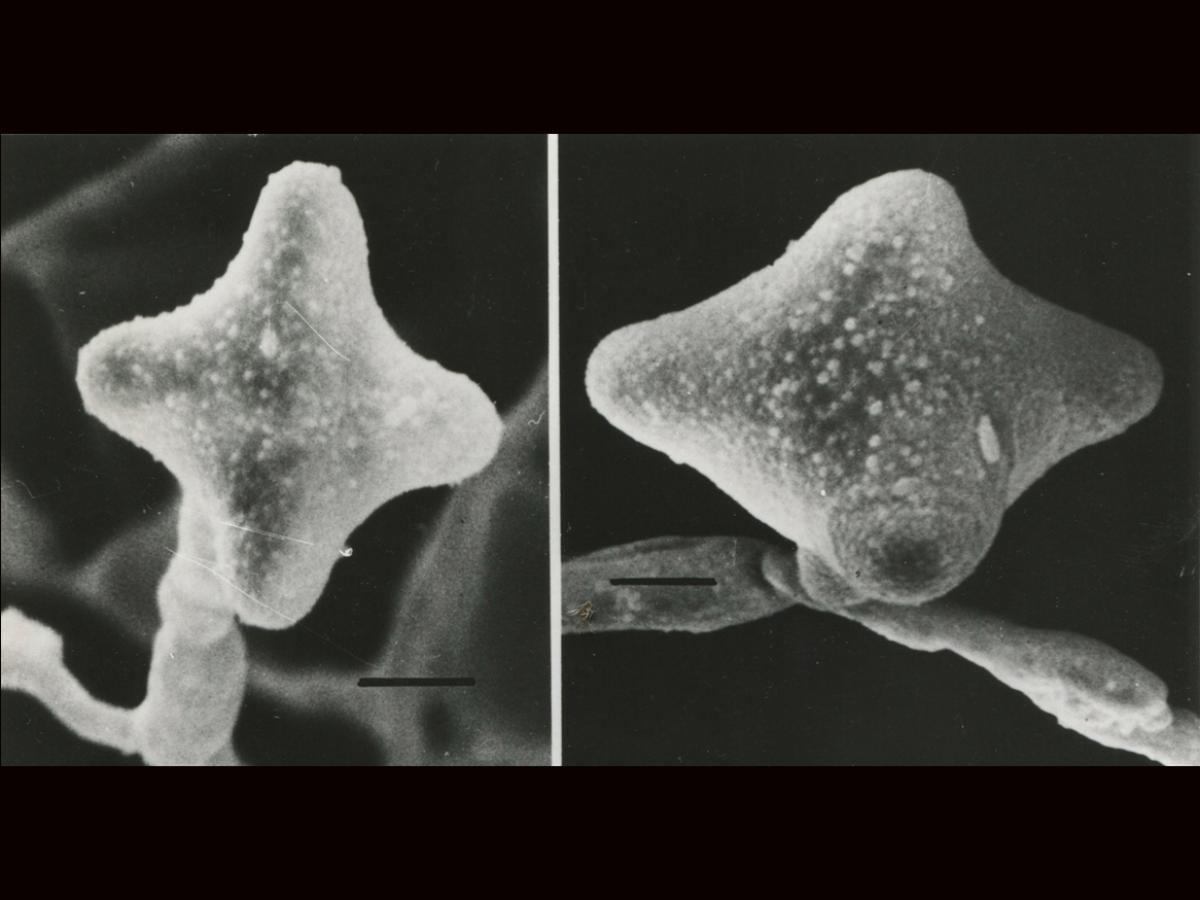
Scanning electron micrographs showing stellate conidia of Thermomyces stellatus.
Key features:
Thermophilic mould, growth at 50C, producing darkly pigmented, stellate conidia.
References:
- Apinis, A.E. (1963) Occurrence of thermophilous microfungi in certain alluvial soils near Nottingham. Nova Hedwigia 5:57-78.
- Apins, A.E. and Eggins, H.O.W. (1966) Thermomyces ibadanensis sp. nov. from oil palm kernal stacks in Nigeria. Transactions of the British Mycological Society 49:629-632.
- Ellis, D.H. (l98l) Ultrastructure of thermophilic fungi. IV. Conidial ontogeny in Thermomyces. Transactions of the British Mycological Society. 77: 229-24l.